
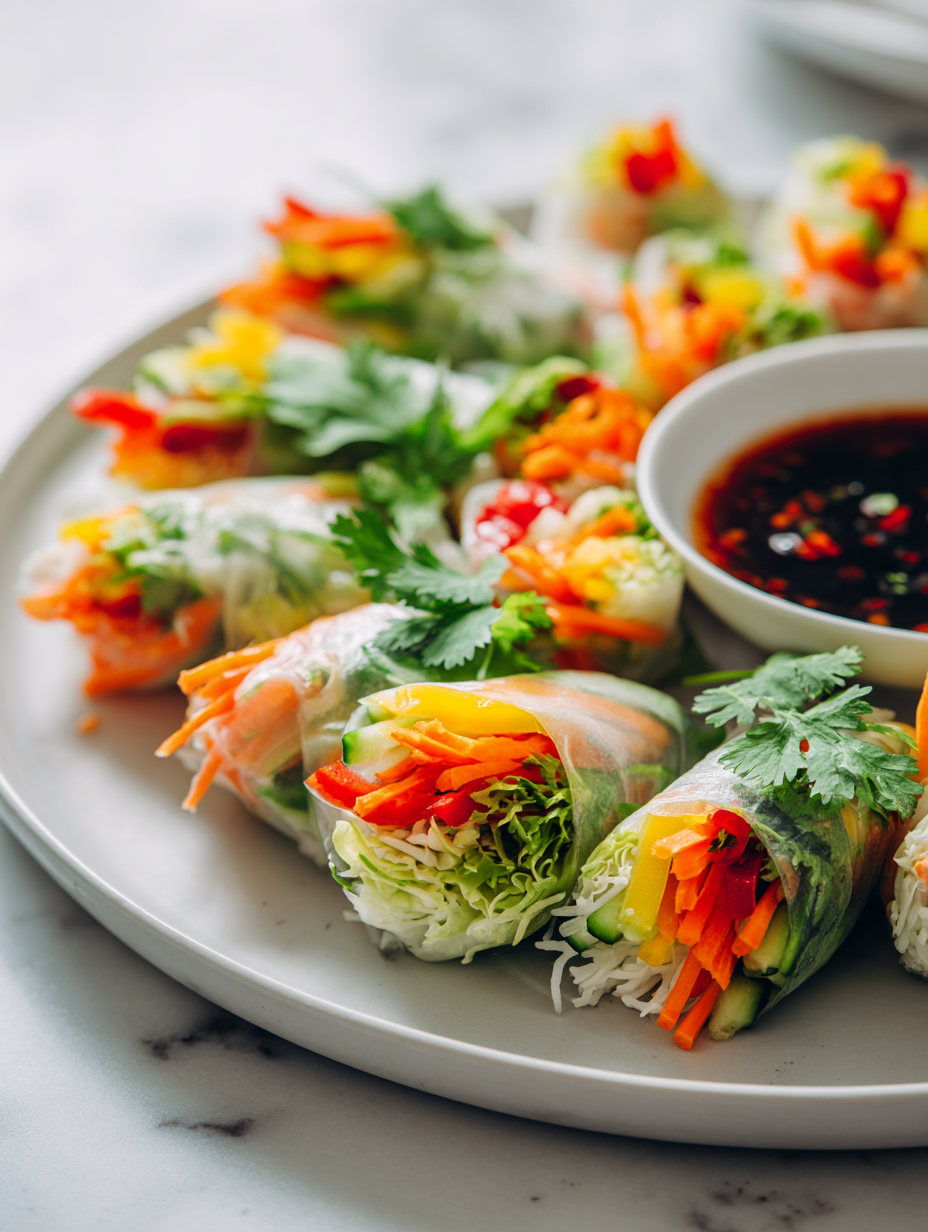
Vegetable spring rolls are one of those dishes that invite you to play with textures—crisp, chewy, and fresh all at once. I love how the crunch from raw veggies contrasts with the soft, pliable rice paper, creating a bite that’s lively and satisfying. It’s a minimal effort, maximum payoff kind of snack, perfect for when you want something light but still crave that satisfying chew.
They’re also surprisingly forgiving, which makes them a great project for experimenting with different fillings and dipping sauces. I find that each time I make them, I get a little more attuned to balancing the moisture and crunch, ensuring every roll holds together without turning soggy. It’s a simple way to turn everyday vegetables into something a bit more special, especially when you want something quick, healthy, and utterly customizable.
Focusing on the art of balancing textures—crispy, chewy, and fresh—in vegetable spring rolls, this recipe emphasizes how each bite should surprise and delight the senses, turning a simple snack into a multi-layered experience.
Textures That Surprise
- Making these spring rolls always reminds me of summer afternoons at my grandma’s house, where the smell of fresh herbs filled the air.
- I used to get frustrated trying to keep the rice paper from tearing, but now I see it’s all about patience and gentle handling.
- There’s a quiet joy in watching the vibrant colors of the veggies peek through the translucent wrap, like tiny windowpanes of freshness.
- Every time I bite into one, I think about how simple ingredients can come together to make something unexpectedly special.
- These rolls have become my go-to when I want a snack that feels both nostalgic and lively, with just the right crunch.
The inspiration behind these rolls
- Making these spring rolls always takes me back to the busy weekend mornings at my local Asian market, where the air is thick with the scent of fresh herbs and roasted peanuts. It’s that feeling of walking into a space full of life, colors, and smells that sparks my creativity in the kitchen. I started experimenting with rolling vegetables like a way to preserve that fresh, vibrant energy for a quick snack or light lunch.
- I remember the first time I got the rice paper to soften just right—firm but pliable enough to wrap without tearing—that moment of quiet triumph. Over time, I realized it’s all about patience and gentle handling, which somehow makes the process meditative and satisfying. Now, these rolls are my go-to when I want to bring a bit of that market freshness home, especially on days that need a little bright, crunchy lift.
- heading:
Contextual origin, trivia, or history
- Vegetable spring rolls trace their roots to Vietnam, where they’re called ‘gỏi cuốn,’ meaning ‘salad rolls,’ hinting at their fresh, raw ingredients.
- Historically, these rolls were a portable snack for farmers and workers, easy to carry and eat without utensils, emphasizing practicality and freshness.
- They gained international popularity in the 20th century, especially in Western countries, as a healthy, light appetizer or snack option.
- The rice paper wrapper was originally used in China and Southeast Asia, becoming a versatile vessel for raw vegetables, herbs, and sometimes cooked proteins.
- Today, they symbolize a celebration of fresh, seasonal produce, often customized with local ingredients and dipping sauces.
Ingredient breakdown: key components
- Carrots: I love how their sweet, crisp bite adds a bright crunch, especially when julienned thin enough to almost melt in your mouth. Feel free to swap them for daikon for a milder, more peppery punch.
- Cucumbers: Their cool, watery freshness makes each bite so lively. Use seedless or de-seeded cucumbers to avoid excess moisture that can make the wraps soggy. Peeling is optional but adds a smooth texture.
- Fresh herbs (mint, cilantro): The aromatic punch of mint lifts everything, while cilantro adds a citrusy, slightly peppery note. If you’re not a fan of cilantro, basil can work beautifully too—just keep the vibrancy.
- Bean thread noodles: They’re the secret to a bit of chewiness inside each roll, with a subtle, slippery texture. Soak them until just tender—over-soaking can make them mushy and tricky to wrap.
- Rice paper: Handling these is all about patience—soak until just pliable, about 10-15 seconds. They’re delicate, so don’t rush the rolling. If they tear, a quick re-dip can save the whole roll.
- Dipping sauce: I prefer a tangy, slightly sweet hoisin or peanut sauce with a splash of lime. It’s the perfect finish—bright and slightly smoky—complementing the raw veggies.
- Optional proteins (shrimp, tofu): If you want a bit of substance, lightly cooked shrimp or firm tofu work great. Keep the protein thinly sliced so it doesn’t overwhelm the fresh veggie crunch.
Spotlight on key ingredients
Carrots and Cucumbers:
- Carrots: I love how their sweet, crisp bite adds a bright crunch, especially when julienned thin enough to almost melt in your mouth. Feel free to swap them for daikon for a milder, more peppery punch.
- Cucumbers: Their cool, watery freshness makes each bite so lively. Use seedless or de-seeded cucumbers to avoid excess moisture that can make the wraps soggy. Peeling is optional but adds a smooth texture.
Notes for ingredient swaps
- Vegetables: Carrots can be swapped for daikon radish for a milder, slightly peppery crunch. Cucumber can be replaced with zucchini for a less watery bite. Feel free to experiment with bell peppers for sweetness.
- Herbs: Mint adds a refreshing burst, but basil provides a slightly spicy note if you prefer a different aromatic. Cilantro can be omitted if you dislike its flavor, or replaced with Thai basil for a different herbal aroma.
- Noodles: Bean thread noodles are slippery and soft; rice vermicelli works as an alternative but might be a bit thicker. Use soba or glass noodles for a different texture, but soak until just tender to avoid mushiness.
- Rice Paper: If unavailable, use rice paper alternatives like spring roll wrappers or even lettuce leaves for a low-carb version. Keep in mind they won’t have the same chew but will still offer freshness.
- Dipping Sauces: Hoisin can be substituted with a spicy peanut sauce or a tangy soy-sesame dip. For a vegan option, try a lime and chili dipping sauce to keep it bright and zingy.
- Protein (Optional): Shrimp can be replaced with tofu or cooked chicken for more substantial filling. Keep the protein thinly sliced to maintain balance and ease of rolling.
- Additional flavor: Add a splash of fish sauce or a dash of sesame oil to the veggie mix for extra depth. Use sparingly to preserve the fresh, clean taste.
Equipment & Tools
- Large shallow dish: To soak rice papers evenly and quickly
- Cutting board and knife: To julienne vegetables and prepare fillings
- Damp towel: To keep rice papers moist and prevent drying
- Small bowl: For soaking rice papers
- Serving platter: To display finished spring rolls
Step-by-step guide to spring rolls
- Gather all your ingredients: julienned carrots, cucumber strips, chopped herbs, soaked bean thread noodles, rice paper, and your chosen protein if using. Have a clean workspace with a damp towel nearby to keep rice papers from drying out.
- Prepare your fillings: Toss the julienned carrots, cucumber, and herbs in a bowl. If using protein, ensure it’s sliced thin and ready to go. Keep everything within arm’s reach for easy assembly.
- Fill a large shallow dish with warm water (about 40°C / 104°F). Submerge one rice paper at a time for 10-15 seconds, until it’s just pliable but not tearing. If it sticks, give it a gentle shake.
- Lay the softened rice paper flat on your workspace. Place a small handful of the veggie mixture roughly one-third from the bottom. Add a few noodles and your protein if using, leaving about 2 cm free on the sides.
- Fold the sides inward over the filling, then roll tightly from the bottom upward, keeping the ingredients snug but not squished. If the rice paper tears, dip again briefly and try a smaller amount of filling.
- Repeat the process with remaining rice papers and fillings. Cover completed rolls with a damp towel to prevent drying out while you finish the rest.
- Once all rolls are assembled, let them rest for 5 minutes at room temperature. This helps the flavors meld and the rice paper to settle.
- Serve with your favorite dipping sauce—hoisin, peanut, or a simple soy-sesame mix. Garnish with extra herbs if desired. Enjoy immediately for best crunch and freshness.
- Check for doneness: the rolls should be firm but flexible, with no tears; the veggies fresh and crisp; the noodles slightly chewy; and the rice paper translucent and shiny.
Let the assembled rolls rest for 5 minutes to set. Serve immediately with dipping sauces. For leftovers, wrap tightly in plastic and refrigerate for up to 24 hours, ideally bringing to room temperature before eating for best texture.
How to Know It’s Done
- Rice paper is translucent and shiny, not dull or sticky.
- Filling holds together without spilling when rolled tightly.
- Veggies are vibrant and crisp, not limp or soggy.
Vegetable Spring Rolls
Ingredients
Equipment
Method
- Prepare all your fillings: julienne carrots and cucumber, chop fresh herbs, and soak the bean thread noodles until tender, then drain well.
- Fill a large shallow dish with warm water, about 40°C / 104°F. Submerge one rice paper at a time for 10-15 seconds until it becomes soft and pliable, then gently lift it out and lay it flat on your damp towel.
- Place the softened rice paper on your workspace, keeping it moist with the damp towel nearby. Spread a small handful of the vegetable mixture about one-third from the bottom of the wrapper, leaving a 2 cm border on each side.
- Add a few strands of soaked noodles and optional protein slices on top of the vegetables, then fold the sides inward over the filling.
- Gently roll the rice paper upward from the bottom, keeping the fillings snug but not squished, until the seam is sealed and the roll is firm.
- Transfer the completed spring roll to a serving platter, cover with a damp towel, and repeat the process with remaining rice papers and fillings.
- Let the assembled rolls rest for about 5 minutes to allow the flavors to meld and the rice paper to settle.
- Serve the spring rolls with your favorite dipping sauce on the side, and enjoy immediately for the best crunch and freshness.
Pro tips for perfect rolls
- Use warm water for soaking rice paper—cold water makes it brittle, warm water keeps it pliable.
- Keep your workspace moist—damp towels prevent rice papers from drying out and tearing.
- Don’t overload the fillings—less is more, it keeps the roll neat and manageable.
- Roll tightly but gently—firm enough to hold together, yet soft enough to avoid tearing.
- Rest the finished rolls for 5 minutes—allows flavors to meld and the rice paper to set.
- Serve immediately for best crunch—moisture makes them soggy fast, so enjoy soon after assembling.
- If rice paper tears, dip again briefly—small tears can often be fixed with a quick re-dip.
Common mistakes and how to fix them
- FORGOT to keep rice paper moist → Keep damp towel nearby to prevent tearing.
- DUMPED ingredients too quickly → Soak rice paper gently for even softening.
- OVER-TORCHED the filling → Use medium heat and keep an eye for vibrant, crisp veggies.
- UNDERESTIMATED resting time → Rest for 5 minutes to let flavors meld and stabilize.
Quick fixes and pantry swaps
- When rice paper tears, splash it with more warm water and gently re-dip.
- If filling spills, patch with a tiny dab of water and press gently to seal.
- Dumped ingredients too cold? Warm them slightly to prevent soggy wraps.
- Over-torched veggies? Quickly rinse under cold water to stop cooking and retain crunch.
- When in doubt, swap rice noodles for glass noodles—they soak fast and stay slippery.
Prep, store, and reheat tips
- Preparing the fillings and chopping vegetables can be done up to a day in advance; keep them refrigerated for freshness with crispness intact.
- Soak the rice papers just before assembly; if soaked earlier, keep them wrapped in a damp towel to prevent drying out and tearing.
- Store finished rolls in an airtight container lined with a damp paper towel; they stay fresh for up to 24 hours but are best enjoyed soon after making.
- Refrigerate leftovers for up to a day, but note that the rice paper may soften further; serve at room temperature to regain some crunch.
- To reheat, briefly warm in a low oven or serve straight from the fridge; the texture will soften but still be delicious with a fresh dip.
Top questions about vegetable spring rolls
1. How do I soften rice paper without tearing it?
Use very warm water, around 40°C / 104°F, to soak rice papers so they become pliable but not soggy.
2. How can I prevent rice papers from tearing?
Keep your workspace and rice papers moist with a damp towel to prevent sticking and tearing during assembly.
3. Why are my spring rolls falling apart?
If your rolls are spilling or loose, try tightening them by rolling more firmly but gently, and don’t overstuff.
4. Should I refrigerate spring rolls before serving?
Chill completed rolls for at least 5 minutes to help set the shape and meld flavors before serving.
5. How do I keep the veggies crisp?
Use crisp, fresh vegetables and soak noodles just until tender—overcooked or soggy ingredients make the rolls limp.
6. What’s a good dipping sauce?
For a vegetarian dip, mix soy sauce, lime juice, and a dash of sesame oil; add chili for heat.
7. Can I substitute herbs in the filling?
Feel free to swap herbs like basil or Thai basil for cilantro or mint to customize flavor profile.
8. How long do spring rolls last in the fridge?
Leftover rolls can be stored in the fridge, wrapped tightly, for up to 24 hours, but they’re best fresh.
9. What if my rice paper tears while rolling?
If rice paper tears during rolling, dip it again quickly in water to soften and try again carefully.
10. What protein options work best?
Use thinly sliced protein or tofu for a balanced bite; keep fillings light to maintain crunch and freshness.
These vegetable spring rolls are more than just a snack; they’re a reminder that simple ingredients, handled with patience, can create something fresh and satisfying. I love how they make me pause—focusing on each crunchy bite and the bright flavors that come together effortlessly.
In a time when quick, healthy bites are more valued than ever, these rolls offer a moment of calm and creativity. They’re perfect for sharing or keeping as a quick, vibrant lunch that never feels dull. Sometimes, it’s the simplest things that turn a regular day around.

Hi, I’m Oliver Stone, the writer, cook, and storyteller behind Crying Into the Onions. I’m so glad you found your way here. This blog was born from equal parts humor, heart, and a deep love for honest cooking. I started this blog to share more than just recipes — I wanted to capture the emotions, memories, and quirks that make food more than fuel. Because sometimes, cooking makes you laugh. Sometimes, it makes you cry (into the onions, naturally). And most of all, it brings people together.