
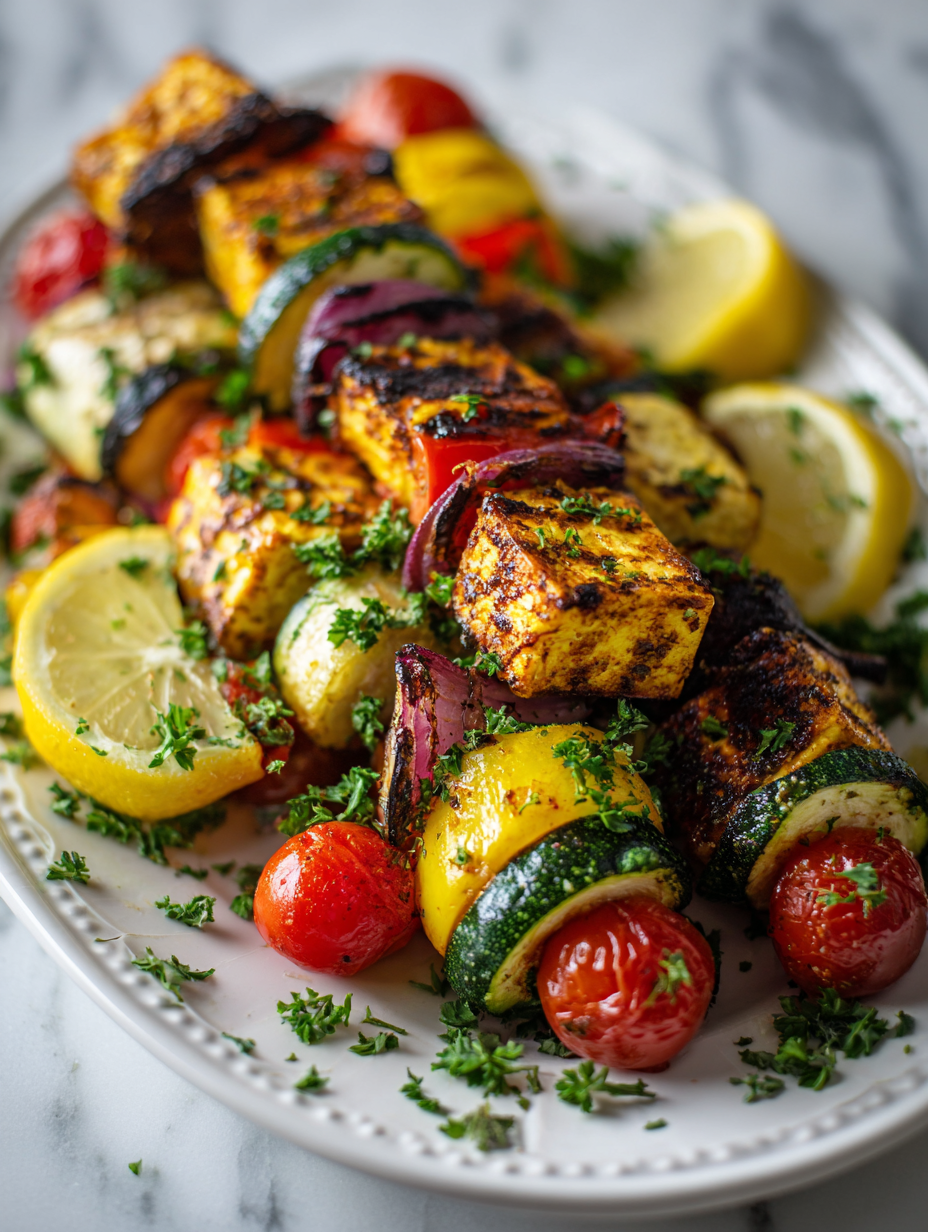
Vegetable kababs might seem simple, but mastering that perfect balance of smoky char and fresh crunch takes a bit of finesse. It’s about understanding the timing—when to flip, when to turn up the heat—so the vegetables get that irresistible grill flavor without turning to mush or losing their brightness. Every time I make these, I feel like I’m chasing that elusive moment where everything just clicks, and the vegetables are tender yet crisp, with a deep smoky aroma lingering in the air.
These kababs are a go-to for me when I want something that feels both casual and vibrant. There’s an honest pleasure in the process—marinating, skewering, grilling—that connects me back to simple, honest cooking. Plus, they’re endlessly adaptable: a little zucchini, a splash of bell peppers, some zucchini, maybe a hint of smoked paprika—each batch feels like a small, colorful celebration on the grill.
Focusing on the overlooked art of balancing smoky char with fresh, crisp vegetables, this recipe emphasizes the importance of timing and flame control to achieve perfect vegetable kababs that are both tender and charred without losing their natural brightness.
Balancing Smoke and Crispness
- These kababs remind me of summer evenings at my grandma’s house, where the smell of smoke and roasted veggies mingled beautifully.
- Pulling off that perfect char without burning the vegetables used to frustrate me, but now I see it’s all about patience and timing.
- I love the way these kababs bring people together—easy to eat, colorful, and packed with fresh flavors that make everyone smile.
- Every time I grill these, I feel a little proud—like I’ve captured that elusive balance between smoky depth and crisp freshness.
The story behind this recipe
- This recipe was born out of a lazy Sunday afternoon, when I rummaged through the fridge and found a bunch of leftover vegetables. Instead of letting them go to waste, I threw them onto skewers, thinking about how grilling could bring out their natural sweetness and add a smoky layer that’s hard to beat. It reminded me of those spontaneous moments in the backyard, where simple ingredients turn into something unexpectedly satisfying.
- I remember the first time I got the timing right—getting the vegetables to char just enough without turning to ash. That little victory made me realize how easy it is to elevate everyday vegetables with a bit of heat and patience. Since then, I’ve kept tweaking the marinade and prep—each batch feels like a small experiment, a bit chaotic but always rewarding.
- heading: ‘The story behind this recipe’,
Trivia and Historical Roots
- Vegetable kababs have roots in Middle Eastern and South Asian grilling traditions, where skewering vegetables is as common as meat.
- Historically, these skewers were a way to make use of seasonal produce, turning simple garden veggies into flavorful bites over open flames.
- In many cultures, vegetable kababs symbolize communal eating, often shared during festivals and family gatherings around smoky grills.
- The concept of grilling vegetables on skewers gained popularity in modern vegetarian cooking, emphasizing flavor and texture contrast.
Ingredient breakdown: key components
- Bell peppers: I love the sweet, smoky aroma they develop—slice them thick so they don’t burn too quickly, and toss in a little olive oil before skewering.
- Zucchini: Its tender, almost creamy texture when grilled makes it a star—cut into even chunks to prevent uneven cooking; a sprinkle of salt enhances that juicy bite.
- Red onion: The way they caramelize and turn ruby-red with a hint of char gets me every time—soak in a bit of lemon juice beforehand to tame the sharpness.
- Cherry tomatoes: Oozy and bursting with juice, they add a smoky pop—use the smallest ones to avoid sogginess, and skewer tightly for even cooking.
- Marinade: A quick mix of olive oil, smoked paprika, garlic, and lemon—brightens the veggies and imparts that smoky depth I crave; don’t skip the lemon zest for extra zing.
- Skewers: Metal or soaked wooden ones—metal heats evenly and crisps the veggies beautifully, while soaked wood prevents burning and adds a subtle smoky note.
Spotlight on key ingredients
Bell peppers:
- I love their sweet, smoky aroma when grilled—slice thick so they don’t burn too quickly, and toss in a little olive oil beforehand.
- Zucchini: Its tender, creamy texture when cooked makes it a star—cut into even chunks for uniform cooking; a sprinkle of salt enhances its juiciness.
- Red onion: Caramelizes beautifully over the heat—slicing into thick rings helps it develop that deep, sweet flavor with a smoky edge.
Key marinade and skewers:
- Cherry tomatoes: Juicy and bursting with flavor, they add a smoky pop—use small ones to prevent sogginess, skewer tightly for even char.
- Marinade: A quick mix of olive oil, smoked paprika, garlic, and lemon zest—brightens and deepens flavor; don’t skip the lemon for that zing.
- Skewers: Metal ones conduct heat evenly and crisp the veggies, while soaked wooden skewers prevent burning and add a subtle smoky aroma.
Notes for ingredient swaps
- Vegetables: Zucchini can be swapped for yellow squash for a slightly sweeter flavor, or eggplant for a more meaty texture that soaks up marinade beautifully.
- Marinade: Use balsamic vinegar instead of lemon juice for a deeper, tangy sweetness—just be mindful it darkens the veggies slightly.
- Oil: Swap olive oil for avocado oil if you want a higher smoke point without losing that rich, nutty undertone.
- Spices: Smoked paprika can be replaced with chipotle powder for a smokier kick, or sweet paprika for milder heat and more vibrant color.
- Skewers: Metal skewers work great, but if you only have wooden ones, soak them longer—up to 1 hour—to prevent burning, and get that subtle smoky aroma.
- Garnish: Fresh herbs like cilantro or parsley can be swapped for mint or basil, depending on your flavor mood—each adds a different fresh, herbal note.
Equipment & Tools
- Barbecue grill or grill pan: To cook the vegetables with smoky char and heat.
- Wooden skewers or metal skewers: To hold vegetables securely while grilling.
- Brush: To apply marinade and lemon juice for flavor and moisture.
- Mixing bowl: To toss vegetables with marinade.
- Tongs: To turn and handle hot skewers safely.
Step-by-step guide to vegetable kababs
- Gather your vegetables: bell peppers, zucchini, red onion, cherry tomatoes. Cut bell peppers and zucchini into 2-inch chunks; slice onion into thick rings. Soak wooden skewers in water for 30 minutes to prevent burning.
- Prepare the marinade: in a bowl, whisk together 3 tbsp olive oil, 1 tsp smoked paprika, 2 minced garlic cloves, and the zest of 1 lemon. Toss the vegetables gently in the marinade, ensuring even coating. Let sit for 15-20 minutes while you preheat the grill.
- Preheat your grill to medium-high, about 200°C (390°F). Clean the grates well and oil lightly to prevent sticking.
- Thread the vegetables onto skewers, alternating colors and types for visual appeal. Leave a little space between pieces for heat circulation.
- Place the skewers on the grill. Cook for about 8-10 minutes total, turning every 2-3 minutes. Look for a slight char, fragrant smoky aroma, and vegetables that are tender but still crisp.
- Check for doneness: veggies should have deep grill marks, with some caramelization on the edges, and be easily pierced with a fork. The tomatoes should be soft and bursting, onions caramelized.
- Remove from grill and let rest for 2-3 minutes on a plate. Brush lightly with extra lemon juice if desired for brightness. Serve hot or at room temperature.
Let the kababs rest for a couple of minutes off heat, allowing flavors to settle. Serve immediately, paired with a fresh squeeze of lemon or your favorite dip for added brightness.
How to Know It’s Done
- Vegetables have deep grill marks and slight charring.
- Tomatoes are juicy and slightly blistered.
- Onions are caramelized and fragrant with smoky notes.
Vegetable Kababs
Ingredients
Equipment
Method
- Start by soaking wooden skewers in water for at least 30 minutes to prevent burning during grilling.
- Prepare your vegetables: cut the bell peppers and zucchini into 2-inch chunks, and slice the red onion into thick rings. Place all the cut vegetables into a mixing bowl.
- In a small bowl, whisk together olive oil, smoked paprika, minced garlic, and lemon zest to make a flavorful marinade.
- Pour the marinade over the vegetables and gently toss to coat everything evenly. Let them sit for 15-20 minutes to absorb the flavors.
- Preheat your grill or grill pan to medium-high heat, aiming for about 200°C (390°F). Lightly oil the grates to prevent sticking.
- Thread the marinated vegetables onto the soaked skewers, alternating colors and types for a vibrant presentation. Leave a small space between each piece for even cooking.
- Place the skewers on the hot grill, cooking for about 8-10 minutes. Turn them every 2-3 minutes to develop deep grill marks and smoky aroma, ensuring the vegetables are tender but still crisp.
- Check for doneness: the vegetables should have deep charring on the edges, with the tomatoes slightly burst and onions caramelized and fragrant.
- Remove the kababs from the grill and let them rest for 2-3 minutes. Brush with a little extra lemon juice or olive oil for added brightness.
- Serve the vegetable kababs hot or at room temperature, garnished with fresh herbs if desired, and enjoy the smoky, crisp-tender bites.
Pro tips for perfect vegetable kababs
- Boldly char: Use high heat and turn skewers often to develop deep, smoky grill marks without burning.
- Oil lightly: Brushing vegetables with oil before grilling helps prevent sticking and encourages even browning.
- Size matters: Keep vegetable chunks uniform for consistent cooking and perfect tender-crisp texture.
- Marinate early: Let vegetables sit in the marinade for at least 15 minutes to infuse flavor and moisture.
- Skewer smart: Alternate colorful veggies for visual appeal and ensure even heat exposure during grilling.
- Check for doneness: Vegetables should be tender yet retain a slight crunch, with visible caramelization.
- Rest briefly: Allow kababs to sit for 2-3 minutes after grilling to lock in juices and enhance flavor.
Common mistakes and how to fix them
- FORGOT to check skewer length → Cut vegetables into even pieces for uniform grilling.
- DUMPED marinade too early → Marinate vegetables for at least 15 minutes to develop flavor.
- OVER-TORCHED skewers → Turn skewers regularly to prevent burning and ensure even char.
- MISSED resting time → Rest kababs for 2-3 minutes for juices to settle before serving.
Quick fixes and pantry swaps
- When vegetables stick, splash a little oil on skewers before grilling.
- If skewers burn quickly, patch with foil wraps around the ends for even heat.
- DUMPED marinade on the coals? Shield the veggies with a quick spray of water to prevent flare-ups.
- When in doubt, swap bell peppers for zucchini—they cook faster and add a fresh crunch.
- Rescue a smoky mess by wiping the grill grate and starting fresh with clean skewers.
Preparation, storage, and reheating tips
- Prep vegetables: Cut bell peppers, zucchini, and onions into chunks a day ahead. Store in airtight containers in the fridge; they stay fresh for up to 24 hours and retain their vibrant color and crispness.
- Marinate early: Mix marinade ingredients and toss with vegetables at least 2 hours beforehand. Keep covered in the fridge; flavors deepen and vegetables absorb the smoky notes during this time.
- Skewer in advance: Thread vegetables onto skewers up to 4 hours before grilling. Keep covered in the fridge; this helps flavors meld and makes grilling quicker when ready to cook.
- Refrigerate cooked kababs: If making ahead, store grilled kababs in an airtight container for up to 1 day. Reheat on a grill or in a hot pan until warmed through—look for a slight shimmer and aroma of smoky spices to tell you they’re ready.
- Reheat with care: For best texture, reheat in a hot skillet or on the grill for 2–3 minutes, turning occasionally. The vegetables should be hot, slightly crispy on the edges, and fragrant with smoky spice.
Top questions about vegetable kababs
1. How do I keep vegetables from falling off skewers?
Use firm vegetables like bell peppers and zucchini to prevent falling apart on the skewer. Soak wooden skewers for 30 minutes to avoid burning.
2. How long should I marinate the vegetables?
Marinate for at least 15 minutes to let flavors seep in. For a smoky taste, use smoked paprika and lemon zest in the marinade.
3. What’s the right temperature for grilling?
Preheat your grill to medium-high (around 200°C/390°F). Look for a fragrant smoky aroma and grill marks to check readiness.
4. How do I know when the kababs are done?
Turn skewers every 2-3 minutes to ensure even charring. Vegetables are done when they are tender, slightly caramelized, and fragrant.
5. Can I substitute other vegetables?
Vegetables like bell peppers and zucchini can be swapped with yellow squash or eggplant for different flavors. Use what’s fresh and colorful.
6. What’s a good marinade for vegetable kababs?
Use a mixture of olive oil, smoked paprika, garlic, and lemon zest for a bright, smoky marinade. Adjust spice levels to your taste.
7. How should I prepare the vegetables for skewering?
Ensure even vegetable sizes for consistent cooking. Keep the chunks large enough to hold onto the skewer without burning or falling apart.
8. Should I rest the kababs before serving?
Rest the grilled kababs for 2-3 minutes after removing from heat. This helps juices settle and enhances flavor. Serve hot or at room temperature.
9. What if my skewers start burning?
If skewers burn, lower heat or turn frequently. Keep a spray bottle handy to cool flare-ups quickly and prevent charring.
10. How do I store and reheat vegetable kababs?
Leftover kababs can be stored in an airtight container in the fridge for up to 24 hours. Reheat on a hot grill or pan until fragrant and slightly crispy.
These vegetable kababs are more than just a grill-side snack; they’re a reminder of how simple ingredients can transform with just a bit of heat and patience. The smoky aroma and vibrant colors make every bite feel like a small celebration, whether it’s summer or a cozy night in. They’re easy to adapt, playful, and always satisfying to pull off.
In a world full of fast food, these kababs reconnect me to honest, unpolished cooking—where flavor, texture, and a little bit of chaos come together. They’re perfect for gathering friends or just enjoying a quiet moment with good food. Honestly, they remind me why I love cooking in the first place: messy, flavorful, and full of surprises.

Hi, I’m Oliver Stone, the writer, cook, and storyteller behind Crying Into the Onions. I’m so glad you found your way here. This blog was born from equal parts humor, heart, and a deep love for honest cooking. I started this blog to share more than just recipes — I wanted to capture the emotions, memories, and quirks that make food more than fuel. Because sometimes, cooking makes you laugh. Sometimes, it makes you cry (into the onions, naturally). And most of all, it brings people together.