
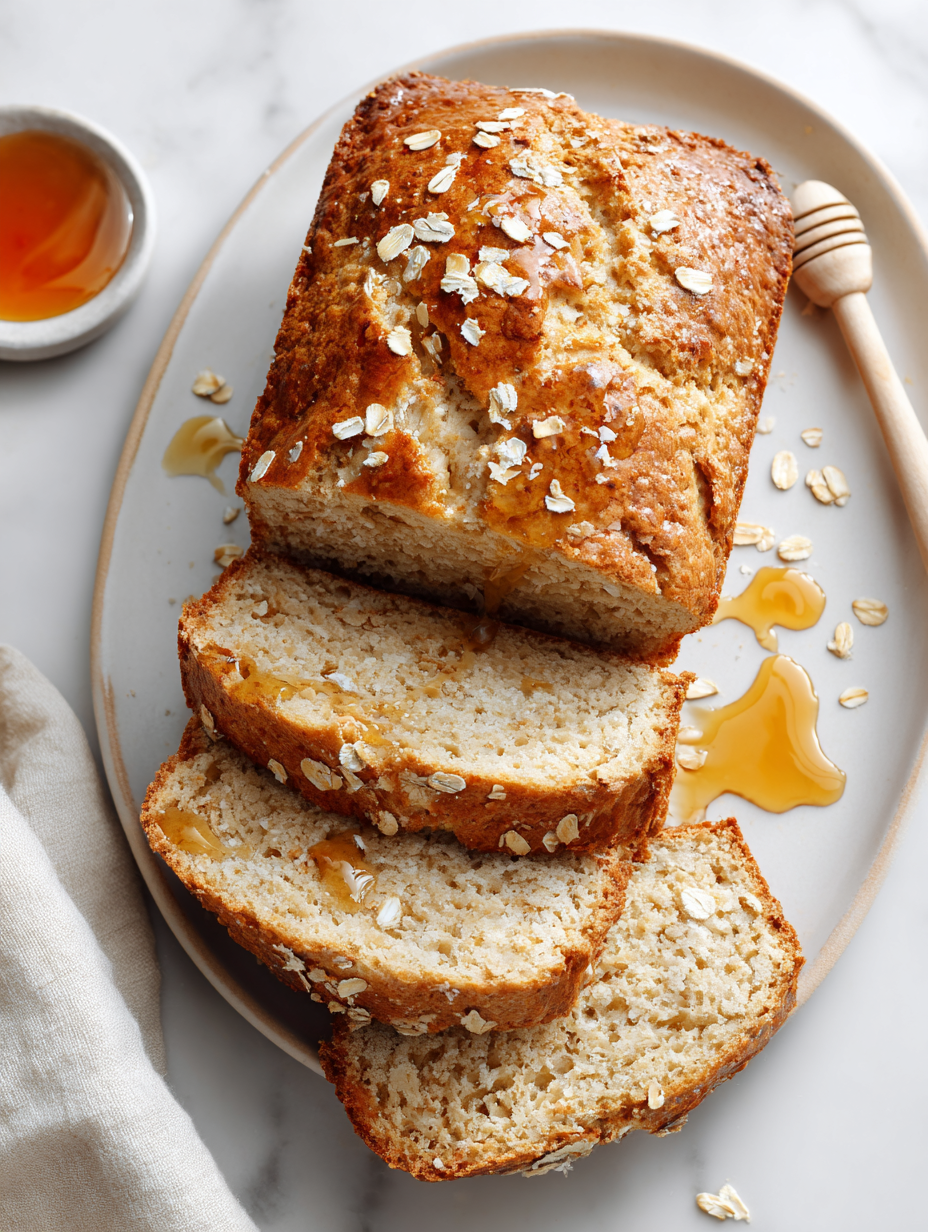
Baking this honey oat bread takes me back to quiet Sunday mornings, when the warm kitchen fills with the sweet scent of honey mingling with toasted oats. It’s a simple pleasure, but one that’s rooted in memories of my grandmother’s gentle hands kneading dough, her stories bubbling up with each fold. There’s something about the process—measuring out honey, watching oats scatter through the dough—that makes me slow down and appreciate the small, honest moments.
This bread is about more than just ingredients; it’s about creating a little ritual of comfort. The oats add a chewy texture and rustic charm, while the honey lends a subtle sweetness that balances beautifully with butter or jam. It’s perfect for mornings when you want a slice that feels like a gentle start, or a snack that’s satisfying without feeling heavy. Baking it feels like inviting a piece of those quiet mornings into your day, no matter how busy life gets.
This honey oat bread recipe is inspired by my childhood mornings, when my grandmother would bake bread infused with a subtle sweetness and hearty oats. It’s a recipe that’s been handed down through generations, but I’ve tweaked it to include a touch of modern whole grains and natural sweetness, making it perfect for slow weekend mornings or when you want something comforting but not overly sweet. Baking this bread feels like a warm hug, especially with the aroma of honey and toasted oats filling the kitchen.
A Bread That Tells a Story
- Baking this bread reminds me of my grandmother’s mornings, when the kitchen smelled of honey and toasted oats, slow and warm.
- There’s a quiet pride in watching the dough rise, knowing this simple loaf will brighten a breakfast or snack.
- It’s a small act—measuring honey, scattering oats—that reconnects me to my roots and makes me feel grounded.
- Sharing slices of this bread feels like passing on a little piece of family history, wrapped in chewy oats and sweet honey.
- Every bite sparks a rush of nostalgia, a reminder that good comfort can be baked right into everyday moments.
A Bread That Tells a Story
- This honey oat bread came from a lazy Saturday morning experiment in my tiny kitchen. I was craving something hearty but with a touch of sweetness—something that could stand up to a smear of butter or jam without feeling heavy. Baking it reminded me of the mornings I’d spend with my grandmother, whose gentle touch turned simple ingredients into comfort. It’s become a way to slow down, to reconnect with those quiet, honest moments that anchor my day.
- Every batch feels like a small act of care, a ritual that makes the whole house smell warm and inviting. I love how the oats give it a rustic chew, while the honey adds a subtle, lingering sweetness. It’s not fancy, but it’s honest—something that feels like a small rebellion against the rush of modern mornings. Baking this bread is my way of holding on to those gentle, unspoken traditions.
- heading: ‘A Bread That Tells a Story’
Contextual origin, trivia, or history
- Honey oat bread has roots in rustic European baking traditions, where hearty grains and sweeteners like honey were staples for sustenance and flavor.
- Oats, originally from Northern Europe, became popular in bread due to their hearty texture and nutritional benefits, especially in colder climates.
- During the Great Depression, honey and oats were common ingredients in homemade bread, valued for their affordability and nourishing qualities.
- This bread style gained popularity in American breakfast tables in the 20th century, especially with the rise of health-conscious baking movements.
- Quirky trivia: Some ancient cultures used honey not just for sweetness but as a natural preservative, helping bread stay fresh longer.
Ingredient breakdown
- Honey: I love the sticky, floral sweetness honey brings—use a good quality, runny honey for best flavor, but feel free to swap with maple syrup if you want a slightly different, richer note.
- Oats: Toasted oats add a hearty chew and nutty aroma—try rolled oats, but steel-cut will give a chunkier texture if you’re feeling adventurous, just soak them a bit first.
- Whole wheat flour: It gives the bread a rustic, dense crumb—whole spelt or spelt flour can be nice swaps, but expect a slightly different texture and flavor.
- Active dry yeast: This is what makes the bread rise—if you prefer instant yeast, just use the same amount and skip proofing, but watch for quicker fermentation.
- Milk: I prefer whole milk for richness—substitute with almond or oat milk for a dairy-free version, just keep an eye on the dough’s hydration as it might need adjusting.
- Salt: It’s the flavor anchor—don’t skip it, but you can reduce slightly if you’re concerned about saltiness, especially if adding salty toppings later.
- Butter: Adds tenderness and flavor—try coconut oil or olive oil if you want a different richness, but keep in mind the flavor shift.
Spotlight on key ingredients
Honey:
- I love how honey adds a sticky, floral sweetness that infuses the bread with a subtle, natural aroma. Use a runny, good-quality honey for maximum flavor, but feel free to swap with maple syrup for a richer, caramel-like note.
- Oats: Toasted oats lend a hearty chew and a nutty aroma. Rolled oats work best for a smooth texture, but steel-cut oats, soaked beforehand, can add an interesting, chunkier bite and rustic appeal.
Oats:
- Whether toasted or raw, oats absorb moisture and develop a toasty, wholesome aroma during baking. They provide a rustic texture and visual appeal, making every slice a little more satisfying.
- Whole wheat flour: It gives the bread a dense, hearty crumb with a slightly nutty flavor. Feel free to experiment with spelt or rye flours, which bring their own unique textures and tastes, though they may alter the crumb slightly.
Notes for ingredient swaps
- Dairy-Free: Swap milk with almond, oat, or coconut milk. The bread might be a touch less rich but still tender.
- Sweetener: Use maple syrup or agave instead of honey for a different floral or caramel note, keep the quantity similar.
- Flour: Substitute whole wheat with spelt or rye flour for a nuttier flavor and slightly different texture—expect a denser crumb.
- Oats: Rolled oats can be replaced with steel-cut oats if soaked beforehand; they’ll add more chew and a rustic look.
- Fat: Replace butter with coconut oil or olive oil for a different richness—expect a subtle flavor shift and slightly softer crumb.
- Yeast: Instant yeast can replace active dry yeast—use the same amount and skip proofing, but watch rise times.
- Additional flavor: Add cinnamon or nuts for extra texture and aroma—just fold in before shaping the loaf.
Equipment & Tools
- Large mixing bowl: For combining and kneading the dough.
- Wooden spoon or dough hook: Mixing ingredients thoroughly.
- Loaf pan (8×4 inch): Shaping and baking the bread.
- Kitchen towel: Covering the dough during rising.
- Oven thermometer: Ensuring accurate oven temperature.
- Spatula: Handling dough and transferring it.
Step-by-step guide to honey oat bread
- Equipment & Tools: Gather a large mixing bowl (for kneading), wooden spoon or dough hook (for mixing), loaf pan (8×4 inch), kitchen towel (for covering), oven thermometer (to check temperature), and a spatula (for handling dough).
- Warm the milk to about 37°C (98.6°F)—it should feel just warm to the touch, not hot, to activate the yeast without killing it.
- In the large bowl, combine the warm milk with the yeast. Stir gently and let sit for 5-10 minutes until frothy and bubbly—this shows the yeast is active.
- Add honey, melted butter, and a pinch of salt into the yeast mixture. Mix well until the honey dissolves completely, releasing a faint sweet aroma.
- Stir in the oats and whole wheat flour gradually. Use a wooden spoon or dough hook on low speed (if using a mixer). The dough should be sticky but manageable, about 8-10 minutes of mixing.
- Transfer the dough into a lightly oiled bowl. Cover with a damp kitchen towel and let it rise in a warm spot (around 24°C / 75°F) for 1-1.5 hours, until doubled in size. It should feel puffy and look airy.
- Preheat your oven to 180°C (350°F). Once risen, punch down the dough gently to release excess gas. Shape it into a loaf and place it into the prepared loaf pan.
- Cover again and let it rise for another 30-45 minutes, until the dough reaches just above the rim of the pan and feels light when poked.
- Bake in the preheated oven for 30-35 minutes. The crust should turn a golden brown, and the loaf will sound hollow when tapped on the bottom. If the top browns too quickly, tent with foil.
- Remove from oven and transfer the bread onto a wire rack. Let it cool for at least 15 minutes before slicing to allow the crumb to set. The aroma of toasted oats and honey should be inviting and warm.
Let the baked bread cool on a wire rack for at least 15 minutes before slicing. This helps the crumb set and prevents it from becoming gummy. Serve warm or at room temperature, with butter or jam if desired.
How to Know It’s Done
- The dough doubles in size during the first rise, indicating good yeast activity.
- The crust turns golden brown and feels firm but not hard after baking.
- The loaf sounds hollow when tapped on the bottom, showing it’s baked through.
Honey Oat Bread
Ingredients
Equipment
Method
- Warm the milk in a small saucepan or microwave until just warm to the touch, about 37°C (98.6°F).
- Pour the warm milk into a large mixing bowl, then sprinkle the yeast over the surface. Let sit for 5-10 minutes until bubbly and frothy—that means the yeast is active and ready.
- Add the honey and melted butter to the yeast mixture, stirring gently to combine. The mixture should smell sweet and yeasty.
- Stir in the whole wheat flour and salt, then add the rolled oats. Mix everything together with a wooden spoon or dough hook until the dough is sticky but cohesive, about 8-10 minutes.
- Cover the bowl with a damp kitchen towel and let the dough rise in a warm spot for 1 to 1.5 hours, until it has doubled in size and feels puffy to the touch.
- Preheat your oven to 180°C (350°F). Gently punch down the dough to release excess gas, then shape it into a loaf and place it into a greased loaf pan.
- Cover the shaped dough again and let it rise for another 30-45 minutes, until it puffs just above the rim of the pan and feels light when pressed.
- Place the loaf in the preheated oven and bake for 30-35 minutes, or until the crust turns a deep golden brown and the loaf sounds hollow when tapped.
- Remove the bread from the oven and transfer to a wire rack. Let cool for at least 15 minutes before slicing to allow the crumb to set properly.
- Slice the bread and enjoy it warm with butter, jam, or simply on its own—its rustic oats and sweet aroma make every bite comforting and satisfying.
Tips and Tricks for Perfect Honey Oat Bread
- Use bread flour for better gluten development and a chewier texture.
- Toast oats lightly before adding to enhance their nutty aroma.
- Incorporate honey at room temperature to ensure it mixes smoothly into the dough.
- Keep the dough slightly sticky during kneading; it yields a tender, moist crumb.
- Use an oven thermometer to ensure accurate baking temperature for a golden crust.
- Let the bread cool completely on a wire rack before slicing to set the crumb.
- Slightly underbake if you prefer a softer crust and a warm, steaming interior.
Common mistakes and how to fix them
- FORGOT to proof the yeast → Activate yeast in warm liquid before mixing.
- DUMPED the dough too early → Allow proper rising until doubled in size.
- OVER-TORCHED the bread → Cover with foil if crust browns too fast.
- MISSED the second rise → Ensure dough puffs up just above pan rim before baking.
Quick fixes and pantry swaps
- When dough is sticky, dust with a little flour to handle more easily.
- If bread isn’t rising enough, warm your proofing area or extend rising time.
- Splash a little water in the oven for a shimmery crust and better oven spring.
- Patch dry edges by brushing with a bit of water before baking.
- Shield the top with foil if it browns too quickly during baking.
Prep, store, and reheat tips
- Prep the dough up to the first rise in advance; refrigerate overnight for a slow, flavor-developing fermentation that yields a richer aroma.
- Once baked, let the bread cool completely before wrapping tightly in plastic wrap or foil; it stays fresh for 2-3 days at room temperature, with a soft, moist crumb and slightly chewy crust.
- For longer storage, slice and freeze the bread in an airtight bag; reheat slices in a toaster or oven until warm and fragrant, with oats slightly toasted and honey aroma rekindled.
- Reheating may soften the crust; for a crisper finish, briefly toast slices directly on the oven rack at 180°C (350°F) for 3-5 minutes, watching for golden edges and toasty oats.
Top questions about Honey Oat Bread
1. Can I use a different sweetener instead of honey?
Use a good quality, runny honey for the best flavor and aroma. You can swap with maple syrup if you prefer a different sweetness profile.
2. Can I substitute steel-cut oats for rolled oats?
Yes, rolled oats work best and toast easily, but steel-cut oats soaked beforehand can add a chunkier, rustic texture.
3. Can I use a different flour?
Whole wheat flour gives a dense, hearty crumb. You can try spelt or rye flour for different flavors, but expect slight changes in texture.
4. Can I swap instant yeast for active dry yeast?
Use active dry yeast, proof it in warm liquid until bubbly. Instant yeast can replace it directly, just skip the proofing step.
5. What can I use instead of regular milk?
Replace milk with almond, oat, or coconut milk for dairy-free versions. Keep in mind the dough’s hydration might need adjusting.
6. How do I know when the bread is fully baked?
The bread is done when it sounds hollow when tapped, has a golden crust, and feels firm but not hard.
7. Should I let the bread cool before slicing?
Let the bread cool completely on a wire rack for at least 15 minutes before slicing. This helps set the crumb and prevents gumminess.
8. Can I make the dough in advance?
You can prep the dough up to the first rise ahead of time. Refrigerate overnight for a slow ferment, developing richer flavors.
9. How should I store leftover bread?
Store cooled bread in an airtight container or wrapped tightly, for 2-3 days at room temperature. Reheat slices in the oven for a fresh feel.
10. What if my bread isn’t crispy enough?
If the crust is too soft, briefly toast slices at 180°C (350°F) for 3-5 minutes. For a quick fix, splash water in the oven for a shimmery crust.
Baking this honey oat bread is more than just making a loaf; it’s about capturing a moment of simple, honest craft. The warm aroma of toasted oats and honey filling the kitchen feels like a small, quiet celebration of tradition and patience. It’s a bread that’s rooted in memories, yet perfect for today’s slow mornings or cozy afternoons.
Every slice reminds me that good, humble ingredients can create something truly comforting. No matter if it’s enjoyed plain or with a smear of butter, this bread offers a gentle reminder to slow down, savor, and appreciate the small, honest moments in life.

Hi, I’m Oliver Stone, the writer, cook, and storyteller behind Crying Into the Onions. I’m so glad you found your way here. This blog was born from equal parts humor, heart, and a deep love for honest cooking. I started this blog to share more than just recipes — I wanted to capture the emotions, memories, and quirks that make food more than fuel. Because sometimes, cooking makes you laugh. Sometimes, it makes you cry (into the onions, naturally). And most of all, it brings people together.