
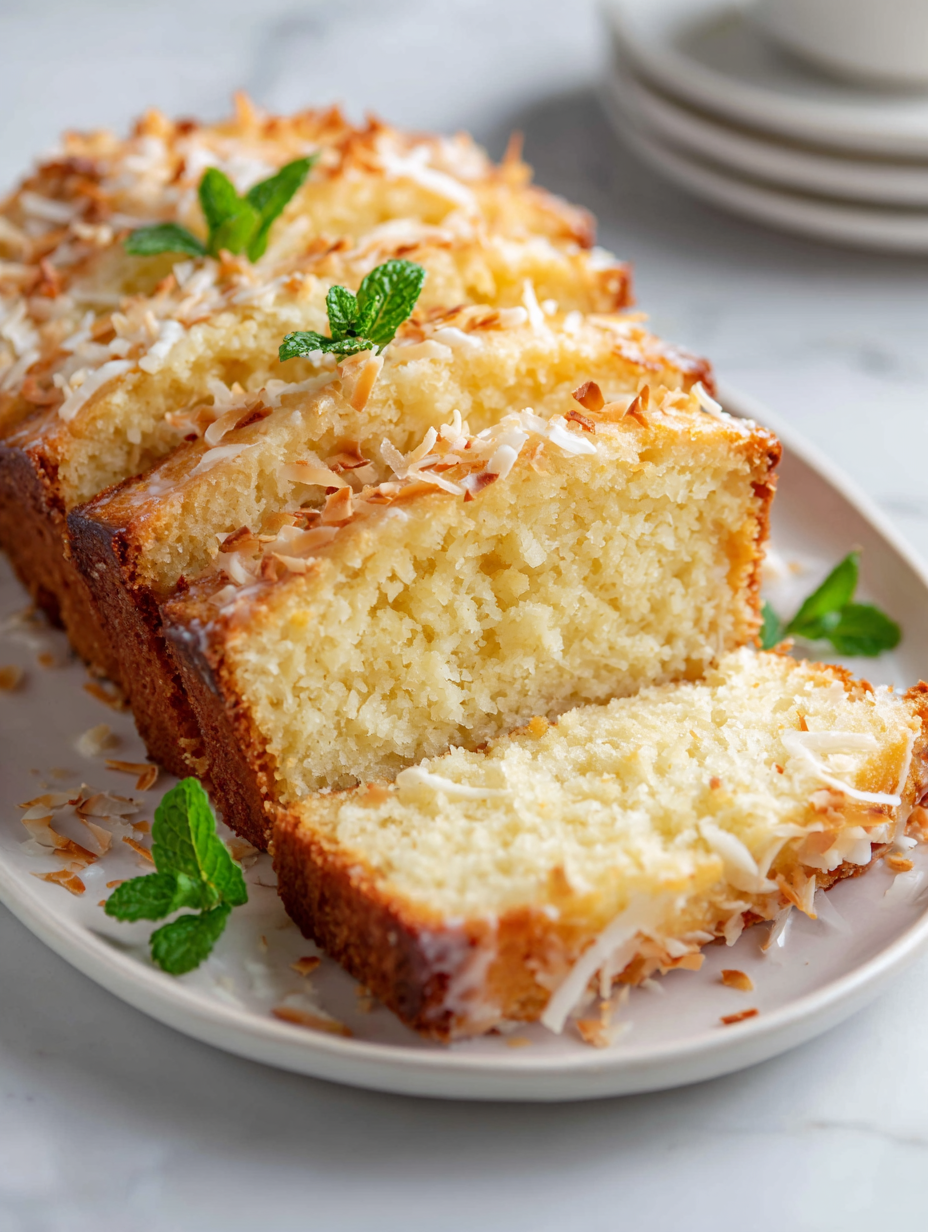
This coconut loaf cake is a little piece of my childhood, baked in my grandma’s kitchen where the air always carried a hint of toasted coconut and warm butter. I remember sneaking bites of the raw batter, feeling like I’d discovered a secret. It’s not about perfecting a bakery look; it’s about the messy, honest joy of baking something that smells like home.
What I love most is how simple ingredients come together into something richer than the sum of its parts. The chewy coconut, golden crust, and tender crumb remind me that good things happen when you keep it honest and let the flavors speak. It’s a recipe that feels both nostalgic and surprisingly forgiving, perfect for a cozy afternoon or a relaxed weekend bake.
This recipe is inspired by childhood memories of my grandmother’s tropical kitchen, where coconut was a staple and baking was a communal affair. I love how coconut’s chewy, smoky aroma can fill a room and transform a simple loaf into a nostalgic moment. It’s about capturing that imperfect, cozy charm of homemade baking, where a little mess and a lot of love make all the difference.
Nostalgic Coconut Baking
- Baking this cake takes me straight back to lazy Sunday mornings at my grandma’s house, where the scent of toasted coconut would fill the whole street.
- I love how this recipe feels like a little rebellion—messy, forgiving, and full of genuine flavor that doesn’t demand perfection.
- There’s a quiet pride in pulling a golden, slightly cracked loaf from the oven, knowing I’ve captured a bit of that tropical, cozy magic.
- Every slice carries a whisper of nostalgia, reminding me that some of the best moments are born from simple, honest baking.
The story behind this recipe
- This coconut loaf cake came about one rainy afternoon when I was digging through an old box of recipes from my mother’s kitchen. I found a crumpled notepad with a few scribbled lines, just enough to hint at a cake she used to make when friends came over. That day, I decided to breathe new life into those scribbles, adding a dash of coconut and a little more love. The result is a cake that feels like a warm hug from the past, with a modern, chewy coconut twist.
- Baking this cake is a slow, honest process—no fuss, just good ingredients, a little patience, and a lot of tasting as I go. It’s become a comfort in my kitchen, especially when I want something sweet but not overly fancy. Each time I bake it, I think about how food can carry stories, memories, and a sense of belonging, all wrapped in a simple loaf.
- heading
- Short Personal Story Behind This Dish
Coconut Cake Trivia
- This recipe draws inspiration from Caribbean baking traditions, where shredded coconut is a staple ingredient in many cakes and pastries.
- Coconut loaf cakes like this became popular in seaside communities, where fresh coconuts were abundant and baking was a communal activity.
- Historically, coconut was considered a luxury ingredient in many Western countries in the early 20th century, often used in festive or special occasion desserts.
- In some cultures, coconut in baking symbolizes hospitality and abundance, often served during celebrations and family gatherings.
Ingredient breakdown: key components
- Unsweetened shredded coconut: I love the chewy, smoky aroma it adds, but if you want a milder taste, try sweetened coconut for a sweeter punch.
- All-purpose flour: I rely on unbleached flour for a bit more rustic flavor, but you can swap half with cake flour for a lighter crumb.
- Butter: The rich, velvety butter makes the cake tender and moist—margarine can work in a pinch, but it won’t carry the same depth of flavor.
- Sugar: I find coconut sugar adds a caramel-like note, but white sugar keeps it classic and bright—adjust based on your sweetness preference.
- Eggs: They give structure and moisture, but if you’re out, a flaxseed egg (1 tbsp flaxseed meal + 3 tbsp water) can do the trick without losing richness.
- Coconut milk: The key to that tender crumb—look for full-fat canned coconut milk. Light versions will make the texture a bit drier and less luscious.
- Baking powder: I double-check to make sure it’s fresh; stale baking powder won’t give you that good rise and a light, airy loaf.
Spotlight on key ingredients
Shredded Coconut:
- Unsweetened shredded coconut: I love the chewy, smoky aroma it adds, but if you want a milder taste, try sweetened coconut for a sweeter punch.
- All-purpose flour: I rely on unbleached flour for a bit more rustic flavor, but you can swap half with cake flour for a lighter crumb.
- Coconut milk: The key to that tender crumb—look for full-fat canned coconut milk. Light versions will make the texture a bit drier and less luscious.
Coconut Milk:
- Butter: The rich, velvety butter makes the cake tender and moist—margarine can work in a pinch, but it won’t carry the same depth of flavor.
- Sugar: I find coconut sugar adds a caramel-like note, but white sugar keeps it classic and bright—adjust based on your sweetness preference.
- Eggs: They give structure and moisture, but if you’re out, a flaxseed egg (1 tbsp flaxseed meal + 3 tbsp water) can do the trick without losing richness.
Notes for ingredient swaps
- Dairy-Free: Swap butter for coconut oil or vegan margarine. It might make the cake slightly denser, but coconut flavor still shines through.
- Sweetened Coconut: Use sweetened shredded coconut instead of unsweetened for a richer, more caramelized flavor, especially if you prefer sweeter baked goods.
- Gluten-Free: Replace all-purpose flour with a 1:1 gluten-free baking blend. Expect a slightly denser crumb but still deliciously chewy.
- Coconut Milk: Opt for full-fat canned coconut milk for richness. Light coconut milk will make the loaf less moist and tender.
- Sugar: Use honey or maple syrup in place of sugar—reduce liquid ingredients slightly to balance moisture, and expect a slightly different sweetness profile.
- Eggs: For a vegan version, try applesauce or mashed banana—these will add moisture but alter the texture slightly.
- Flour: Whole wheat or spelt flour can be used for a nuttier flavor and denser crumb, but reduce the amount slightly to prevent dryness.
Equipment & Tools
- 9×5 inch loaf pan: To shape and bake the cake evenly.
- Mixing bowls: To combine wet and dry ingredients separately.
- Whisk or electric mixer: To cream butter and sugar thoroughly.
- Spatula: To fold in shredded coconut and smooth batter.
- Toothpick or cake tester: To check for doneness.
- Cooling rack: To cool the cake evenly and prevent sogginess.
Step-by-step guide to Coconut Loaf
- Preheat your oven to 180°C (350°F). Grease a 9×5 inch loaf pan with butter and line with parchment paper for easy removal.
- In a large bowl, whisk together 1 1/2 cups all-purpose flour, 1 teaspoon baking powder, and a pinch of salt. Set aside.
- In another bowl, cream 1/2 cup softened butter and 1 cup sugar until light and fluffy, about 3-4 minutes. Use a hand or stand mixer on medium.
- Add 3 large eggs, one at a time, beating well after each. Make sure they’re fully incorporated before adding the next. Smell for a faint buttery scent.
- Stir in 1/2 cup coconut milk and 1 teaspoon vanilla extract until combined. The mixture should be smooth and slightly glossy.
- Fold in 1 1/2 cups shredded coconut—preferably unsweetened. The batter will be thick but moist and chewy with coconut aroma.
- Gradually add the dry ingredients into the wet, mixing on low speed or folding gently. Do not overmix—lumps are okay.
- Pour the batter into the prepared loaf pan, smoothing the top with a spatula. Tap gently to settle the batter and remove air bubbles.
- Bake for 50-55 minutes. The top should turn golden brown and crack slightly. The edges will pull away from the pan.
- Check for doneness by inserting a toothpick in the center; it should come out clean. The loaf should feel firm but spring back when pressed.
- Let the cake cool in the pan for about 15 minutes. Then transfer to a wire rack to cool completely, about 30 minutes. The aroma of toasted coconut will fill your kitchen.
- Once cooled, slice and serve. The cake is best enjoyed slightly warm or at room temperature, with a cup of tea or a dollop of cream.
Allow the cake to cool completely on a wire rack before slicing. This helps set the crumb and makes slicing easier. Serve as is or dust lightly with powdered sugar for a pretty finish.
How to Know It’s Done
- Golden crust with a slight crackle on top.
- Toothpick inserted in center comes out clean.
- Loaf feels firm yet springy when gently pressed.
Nostalgic Coconut Loaf Cake
Ingredients
Equipment
Method
- Preheat your oven to 180°C (350°F) and grease a 9x5 inch loaf pan, then line it with parchment paper for easy removal.
- In a large bowl, whisk together the flour, baking powder, and salt until evenly combined. This creates a dry base for the batter.
- In another bowl, cream the softened butter and sugar using a whisk or electric mixer until the mixture is light, fluffy, and slightly pale, about 3-4 minutes, releasing a sweet aroma.
- Add eggs one at a time to the creamed mixture, beating well after each addition until fully incorporated, making the batter smooth and glossy.
- Stir in the coconut milk and vanilla extract until the batter is uniform, glossy, and slightly thickened, filling your kitchen with a fragrant coconut aroma.
- Gently fold in the shredded coconut using a spatula, ensuring it’s evenly distributed without deflating the batter’s airy structure.
- Gradually add the dry ingredients to the wet mixture, folding gently until just combined; avoid overmixing to keep the loaf tender.
- Pour the batter into the prepared loaf pan, smoothing the top with a spatula for an even surface, and tap the pan gently on the counter to release air bubbles.
- Bake in the preheated oven for 50-55 minutes, until the top turns golden brown and a toothpick inserted into the center comes out clean.
- Remove the loaf from the oven and let it cool in the pan for about 15 minutes, then transfer to a wire rack to cool completely, allowing the flavors to deepen.
- Slice the cooled loaf with a serrated knife, revealing a golden crust, chewy coconut bits, and a tender crumb. Serve warm or at room temperature to enjoy the nostalgic aroma and texture.
Pro tips for coconut loaf
- Bolded tip: Use toasted coconut for a deeper, smoky aroma that complements the sweetness.
- Bolded tip: Cream butter and sugar thoroughly—this creates a lighter, fluffier crumb with better lift.
- Bolded tip: Fold in shredded coconut gently to keep the batter airy and prevent deflating the leavening.
- Bolded tip: Check for doneness by inserting a toothpick—should come out clean with a slight moist crumb.
- Bolded tip: For a more intense coconut flavor, brush the cooled loaf with warmed coconut milk before serving.
- Bolded tip: Sift dry ingredients to avoid clumps and ensure even distribution for a smooth batter.
- Bolded tip: Rest the cake at room temperature before slicing—this helps set the crumb and prevents crumbling.
Common Coconut Loaf Cake Fixes
- FORGOT to check oven temperature → Use an oven thermometer for accuracy.
- DUMPED batter before mixing → Fold in coconut gently to avoid deflating.
- OVER-TORCHED crust → Cover loosely with foil if browning too fast.
- MISSED resting time → Allow cake to cool fully for clean slices and better flavor.
Quick fixes and pantry swaps
- If batter is too thick, splash in a teaspoon of coconut milk and fold gently.
- When loaf cracks excessively, shield with foil and lower oven temperature slightly.
- Dumped raw coconut into the batter? Rescue with a spatula and fold in evenly.
- Over-torched crust? Patch with a damp cloth and reduce oven heat for the next batch.
- When coconut scent is faint, sprinkle toasted coconut on top before baking for aroma and texture.
Prep, store, and reheat tips
- Prepare the batter up to a day in advance, then cover and refrigerate; the flavors deepen overnight, and the coconut stays chewy and fragrant.
- Store cooled slices in an airtight container at room temperature for up to 2 days; the loaf remains moist and aromatic, with coconut scent intensifying.
- Wrap the whole loaf tightly in plastic wrap and freeze for up to 1 month; reheat slices in a 150°C (300°F) oven until just warmed and fragrant, about 10 minutes.
- Reheat individual slices briefly in the microwave on medium power—watch for the coconut to become oozy and the crumb to soften without drying out.
Top questions about Coconut Loaf Cake
1. Can I use pre-shredded coconut instead of fresh?
Use freshly grated or frozen shredded coconut for the best chewy texture and smoky aroma. Dried, pre-shredded coconut works too but might be less vibrant.
2. Can I substitute coconut sugar with regular sugar?
Absolutely, swapping coconut sugar for regular sugar will give a caramel-like flavor, but the cake might be slightly darker and less moist.
3. What if I don’t have butter?
Yes, you can replace butter with coconut oil or vegan margarine. Expect a slightly different crumb, but coconut flavor remains prominent.
4. Can I use light coconut milk?
Use full-fat canned coconut milk for richness. Light coconut milk will make the cake less moist and tender, so go full-fat if possible.
5. What’s a good egg substitute?
You can replace eggs with flaxseed eggs (1 tbsp flaxseed meal + 3 tbsp water). It works well but may slightly alter the texture.
6. How do I know when it’s done?
Bake until the top is golden with a slight crackle and a toothpick inserted in the center comes out clean. The edges should pull away slightly from the pan.
7. How should I store leftovers?
Wrap the cooled cake tightly and store at room temperature for up to 2 days or freeze slices for up to a month. Reheat in the oven for a few minutes until fragrant.
8. What if the batter is too thick or cracks?
If the batter feels overly thick, splash in a teaspoon of coconut milk and fold gently. For cracks, shield with foil and lower oven temp.
9. How can I boost coconut flavor?
Toast shredded coconut beforehand for a smoky aroma that deepens the flavor. Gently fold toasted coconut into the batter for best results.
10. Any quick tips for even baking?
Use a thermometer to ensure your oven is calibrated correctly. Baking at the right temperature prevents over-browning and uneven baking.
Baking this coconut loaf cake is a small reminder that the simplest ingredients—coconut, butter, sugar—can create something that feels both nostalgic and comforting. It’s a reminder to keep things honest and let the natural flavors shine through, especially when the house fills with that toasted coconut aroma.
Whether it’s a lazy weekend treat or a spontaneous moment of baking, this cake offers a little slice of warmth and memory. No matter how many times I make it, the smell of coconut and the crackly golden crust still manage to surprise me in the best way.

Hi, I’m Oliver Stone, the writer, cook, and storyteller behind Crying Into the Onions. I’m so glad you found your way here. This blog was born from equal parts humor, heart, and a deep love for honest cooking. I started this blog to share more than just recipes — I wanted to capture the emotions, memories, and quirks that make food more than fuel. Because sometimes, cooking makes you laugh. Sometimes, it makes you cry (into the onions, naturally). And most of all, it brings people together.