
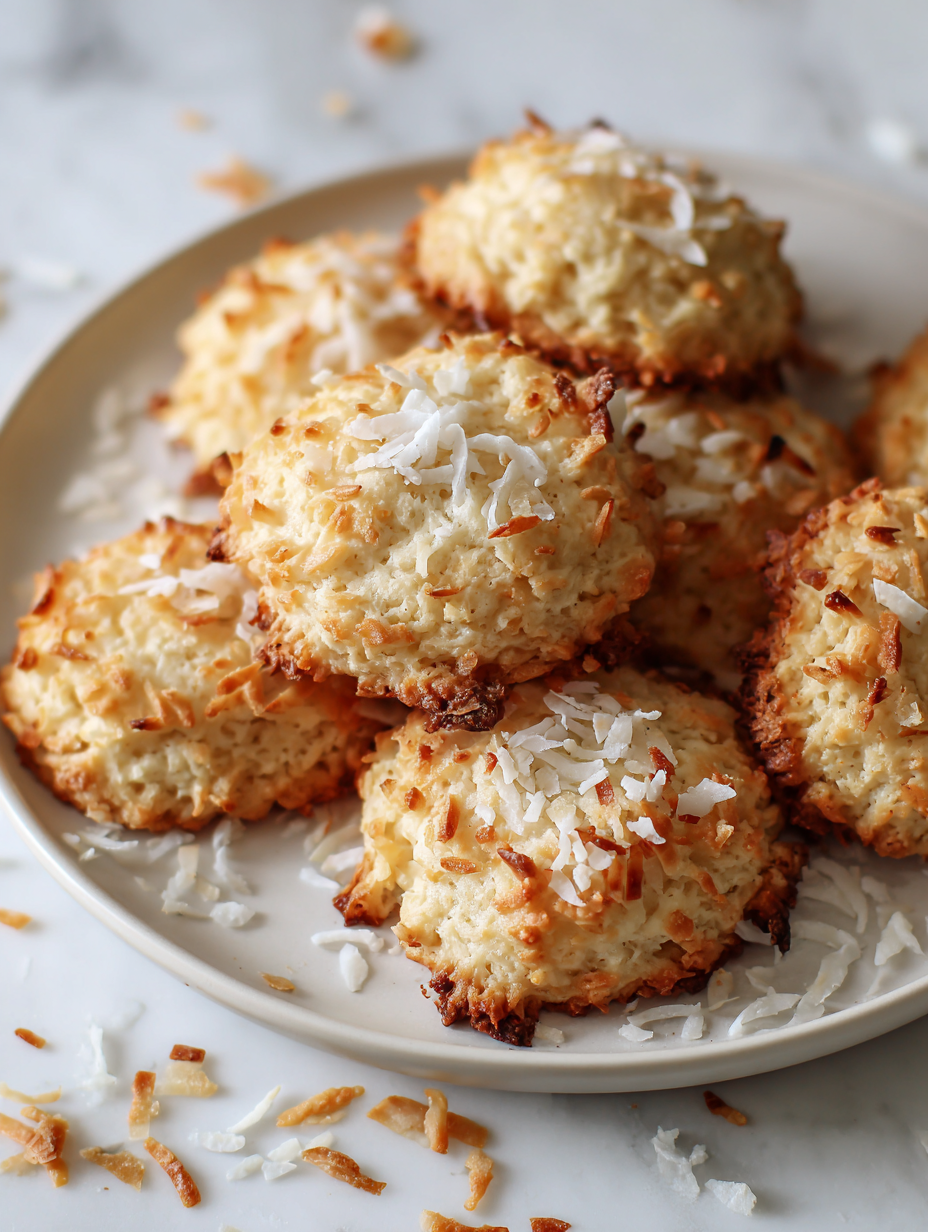
Coconut cookies are often just sweet, chewy bites, but I’ve found that toasting the shredded coconut beforehand adds a whole new dimension. That nutty aroma, the deep golden color, it’s like bringing a little bit of the tropics into your kitchen. It’s honestly a small step that makes a big difference in flavor and texture.
This recipe is my go-to when I want something familiar but with a twist that surprises even the seasoned cookie lovers. Toasted coconut gives the cookies a richer, more complex flavor and a satisfying crunch that you don’t get from raw coconut. Plus, the smell of toasting coconut alone is enough to make the whole house feel cozy and inviting.
Focusing on the overlooked technique of toasting shredded coconut for deeper flavor and crunch, transforming simple cookies into a multi-sensory treat.
The story behind this recipe
- I first started making these cookies on lazy Sunday afternoons, inspired by a trip to the tropics I took years ago. The smell of toasted coconut in the oven always takes me right back there. It’s funny how a simple ingredient can hold a whole memory.
- One rainy day, I decided to toss some shredded coconut in the oven just to see if the aroma alone could brighten the gloom. The crackle and nutty scent that filled the kitchen was irresistible. From that moment, I knew toasted coconut had to be a key part of my cookie recipe.
- Now, I keep a jar of toasted shredded coconut in the pantry, ready to elevate anything from cookies to granola. It’s a small ritual that always makes baking feel like a mini escape, even when the weather isn’t cooperating.
Ingredient breakdown: key components
- Shredded coconut: I like to toast mine until it’s golden and fragrant, which enhances the nutty flavor and adds crunch. Skip this step if you prefer a softer texture, but trust me, it’s worth the extra few minutes.
- Unsweetened coconut: I always use unsweetened because it keeps the cookies from becoming overly sweet. If you only have sweetened, reduce the sugar in the recipe to balance the flavors.
- Butter: I opt for salted butter to add a subtle salinity that balances the sweetness and coconut’s richness. For a dairy-free version, try coconut oil—though the texture will be slightly different.
- Sugar: I prefer a mix of white and brown sugar for depth—brown adds a caramel note and keeps the cookies moist. If you want them crisper, bump up the white sugar a bit.
- Eggs: They give structure and chew. If you’re vegan, flax eggs work but will alter the texture slightly—more crumbly, less chewy.
- Flour: I stick with all-purpose flour for reliable structure. Whole wheat or gluten-free flours can be substituted, but they’ll change the crumb and density.
- Vanilla extract: A splash brightens everything up. If you love a hint of coconut flavor, add a little coconut extract along with the vanilla.
Spotlight on key ingredients
Coconut:
- Shredded coconut: I toast mine until golden and fragrant, which intensifies the nutty aroma and adds crunch. It’s a small step but makes a big flavor difference.
- Unsweetened coconut: I prefer unsweetened for balance; if using sweetened, cut back on sugar to prevent overly sweet cookies. The natural coconut flavor is brighter without added sugar.
- Its natural oils melt into the dough, giving a chewy bite and rich aroma. The toasting process creates that irresistible smoky, caramel scent during baking.
Notes for ingredient swaps
- Dairy-Free: Swap butter for coconut oil or vegan margarine. Expect a slightly softer, less rich cookie texture.
- Sweetener Variations: Use honey or maple syrup instead of sugar. Will add moisture and a different flavor note, so adjust dry ingredients accordingly.
- Coconut Type: Use desiccated or shredded, sweetened or unsweetened, depending on what you have. Sweetened adds more sweetness but can overpower subtle flavors.
- Flour Alternatives: Swap all-purpose flour for almond flour or gluten-free blends. Expect a denser, more delicate crumb, and possibly a different rise.
- Egg Replacement: Use flaxseed meal or applesauce for vegan cookies. Will change the chewiness and binding slightly.
- Toasted Coconut: If you skip toasting, coconut will be softer and less aromatic. Toast for more crunch and a deeper flavor.
- Add-ins: Mix in chocolate chips, dried fruit, or chopped nuts. Will add bursts of flavor and texture contrast.
Equipment & Tools
- Baking sheet: To toast coconut and bake cookies evenly.
- Parchment paper: To prevent sticking and make cleanup easier.
- Mixing bowls: To combine ingredients thoroughly.
- Electric mixer or whisk: To cream butter and sugars smoothly.
- Cookie scoop or tablespoon: To portion dough uniformly.
- Cooling rack: To cool cookies evenly without sogginess.
Step-by-step guide to coconut cookies
- Preheat your oven to 180°C (350°F). Line a baking sheet with parchment paper.
- Spread shredded coconut evenly on the sheet. Toast for 5-7 minutes, stirring halfway, until golden and fragrant. Let cool.
- In a mixing bowl, combine softened butter (115g/1/2 cup) and sugars (100g/1/2 cup white, 80g/1/3 cup brown) until creamy, about 2 minutes.
- Add one large egg and 1 tsp vanilla extract. Mix until well incorporated, about 30 seconds.
- In a separate bowl, whisk together 200g (1 1/3 cups) all-purpose flour, 1/2 tsp baking soda, and a pinch of salt.
- Gradually add dry ingredients to wet, mixing on low speed just until combined. Do not overmix.
- Stir in the cooled toasted coconut (about 1 cup). The dough will be thick and slightly sticky.
- Using a tablespoon or cookie scoop, portion dough onto the prepared baking sheet, leaving about 2 inches between cookies.
- Gently press each cookie slightly flat with the back of a spoon or your fingers to ensure even baking.
- Bake for 10-12 minutes, until edges are golden brown and the centers look set but soft.
- Remove from oven and let cookies rest on the tray for 5 minutes. They will firm up as they cool.
- Transfer cookies to a wire rack to cool completely. Enjoy warm or at room temperature.
- For a crunchier cookie, bake a minute longer. For softer cookies, reduce baking time slightly.
Let cookies rest on the baking sheet for 5 minutes before transferring to a wire rack. Serve at room temperature for best texture and aroma.
How to Know It’s Done
- Edges are golden and slightly crisp, with a faint toasted aroma.
- Cookies jiggle gently in the center but are mostly set; avoid overbaking to keep softness.
- The toasted coconut on top is visibly golden and fragrant, adding texture and flavor.
Toasted Coconut Cookies
Ingredients
Equipment
Method
- Preheat your oven to 180°C (350°F). Line a baking sheet with parchment paper.
- Spread the shredded coconut evenly on the baking sheet and toast in the oven for 5-7 minutes, stirring halfway through, until golden and fragrant. Remove and let cool; this enhances the coconut's nutty aroma and crunch.
- In a large mixing bowl, cream together softened butter and both sugars using an electric mixer or whisk until the mixture is light and creamy, about 2 minutes. You’ll notice it becomes fluffy and pale.
- Add the egg and vanilla extract to the creamed mixture, mixing just until fully incorporated. The mixture should look smooth and slightly shiny.
- In a separate bowl, whisk together the all-purpose flour, baking soda, and a pinch of salt. Gradually add these dry ingredients to the wet mixture, mixing on low speed just until combined. Be careful not to overmix, as this keeps the cookies tender.
- Fold in the cooled toasted coconut with a spatula or spoon until evenly distributed throughout the dough. The dough will be thick and slightly sticky.
- Using a tablespoon or cookie scoop, portion the dough onto the prepared baking sheet, leaving about 2 inches between each cookie. Gently press each cookie slightly flat for even baking.
- Bake in the preheated oven for 10-12 minutes, or until the edges are golden brown and the centers are just set but still soft. You’ll smell a warm, toasty aroma filling your kitchen.
- Remove the cookies from the oven and let them rest on the baking sheet for 5 minutes. This helps them set and prevents breaking when transferring.
- Transfer the cookies to a cooling rack and let them cool completely. Once cooled, enjoy the chewy interior and crunchy coconut topping, or serve warm for a gooey treat.
Tips & Tricks for Perfect Cookies
- Toasting coconut: Keep a close eye during the last few minutes to prevent burning and bring out a rich, smoky aroma.
- Chilling dough: Refrigerate the dough for at least 30 minutes before baking to enhance flavor and prevent spreading.
- Uniform cookies: Use a cookie scoop for evenly sized portions, ensuring consistent baking and texture.
- Baking temperature: Bake at 180°C (350°F) for a golden edge—if edges brown too quickly, lower the oven temp slightly.
- Cooling: Let cookies rest on the baking sheet for 5 minutes; this helps set their shape and keeps them tender.
- Avoid overmixing: Mix dry and wet ingredients just until combined to keep cookies light and prevent toughness.
- Enhance crunch: For extra crispness, bake cookies an additional minute, watching carefully for color change.
Common mistakes and how to fix them
- FORGOT to toast coconut → Coconut needs to be toasted until golden, not just raw.
- DUMPED eggs → Ensure eggs are fully incorporated; skipping this leads to dense cookies.
- OVER-TORCHED coconut → Watch closely to prevent burning, which makes cookies bitter.
- MISSED resting time → Let cookies cool 5 minutes on tray before transferring to keep shape.
Quick fixes and pantry swaps
- If cookies spread too much → Chill dough for 30 minutes before baking.
- When coconut isn’t toasted enough → Return to oven for 2 more minutes, watch closely.
- Splash water on hands when handling sticky dough → Prevent sticking for cleaner portions.
- Patch underbaked cookies → Bake 2 extra minutes until edges are golden and firm.
- Shield burnt coconut → Use foil on top if edges brown too quickly, keep inside soft.
Prep, store, and reheat tips
- Prepare the dough and shape into logs or discs up to 24 hours in advance; keep wrapped in plastic in the fridge. The flavors meld and the dough firms up, making slicing easier later.
- Toast shredded coconut ahead of time; store in an airtight container at room temperature for up to a week. The toasted aroma intensifies over time, so it’s ready whenever you need it.
- Cookies can be baked and stored in an airtight container at room temperature for 3-4 days, with each cookie feeling slightly softer but still flavorful. Reheat briefly in a 150°C (300°F) oven for 3-5 minutes until warm and fragrant.
- Frozen cookie dough balls freeze well for up to 2 months. Thaw at room temperature for 15-20 minutes before baking. Expect a slightly denser crumb but still deliciously coconutty.
- To reheat baked cookies, warm in the oven at 150°C (300°F) for 2-3 minutes. The smell will perk up and the edges will regain a just-baked crispness, perfect for serving.
Top questions about coconut cookies
1. How do I toast coconut properly?
Toast shredded coconut until it’s golden and fragrant, about 5-7 minutes, for that deep nutty aroma and crunch.
2. Can I use sweetened coconut?
Use unsweetened shredded coconut to keep cookies from getting overly sweet; sweetened coconut will change the flavor balance.
3. Should I chill the cookie dough?
Chill the dough for at least 30 minutes before baking; it helps prevent spreading and enhances flavor.
4. What’s the perfect baking time?
Bake at 180°C (350°F) until edges are golden, about 10-12 minutes. Watch for browning to avoid overbaking.
5. How do I know when cookies are ready?
Cookies are done when edges are crisp, centers are set but soft, and coconut on top is nicely toasted.
6. Can I make these dairy-free?
For a dairy-free version, substitute butter with coconut oil. Expect a slightly softer texture and coconut aroma.
7. How can I make the cookies uniform?
Use a cookie scoop for uniform size. This ensures even baking and consistent texture.
8. How should I store the cookies?
Store baked cookies in an airtight container at room temperature for 3-4 days. Reheat briefly for fresh flavor.
9. How do I fix cookies that spread too much?
If cookies spread too much, chill the dough longer or reduce oven temperature slightly. For a crunch, bake a minute longer.
10. Can I add other ingredients?
Adding chopped nuts or chocolate chips can enhance texture and flavor, but reduce coconut or sugar slightly to balance.
Baking these coconut cookies is like capturing a little bit of sunshine, especially when the toasted coconut fills the kitchen with a smoky, caramel scent. They’re honest, simple treats that remind me how a small twist can turn everyday baking into a moment of joy.
Whenever I bake a batch, I feel a quiet pride in the process—watching them turn golden, smelling that rich aroma, and knowing I’ve kept it real with just a handful of ingredients. It’s a baking moment that feels grounding and, honestly, pretty satisfying.

Hi, I’m Oliver Stone, the writer, cook, and storyteller behind Crying Into the Onions. I’m so glad you found your way here. This blog was born from equal parts humor, heart, and a deep love for honest cooking. I started this blog to share more than just recipes — I wanted to capture the emotions, memories, and quirks that make food more than fuel. Because sometimes, cooking makes you laugh. Sometimes, it makes you cry (into the onions, naturally). And most of all, it brings people together.